Malaysia Travel Guide 2026: Cities, Islands and Food Trails
Updated for 2026.
Malaysia's west coast, east coast, and Borneo run on different clocks — quite literally, since their dry seasons don't line up — and the country rewards travelers who plan around that split instead of trying to force a single loop through all three. This guide is about sequencing cities and islands sensibly before you head to the Malaysia destination hub to apply.
Why Malaysia works for mixed city–island trips
A Malaysia trip naturally breaks into a city block (Kuala Lumpur, maybe Penang) and an island or nature block (east-coast islands or Borneo), and trying to cram both into a short trip usually means shortchanging one. The west coast's Kuala Lumpur–Penang corridor is best from December to February, while the east-coast islands are driest from March to September — the opposite window — so the calendar itself often decides which half of the country gets more time on a given trip.
Because those seasons don't overlap cleanly, most well-paced itineraries pick a dominant theme — city-and-food, or beach-and-island — rather than splitting time evenly and fighting the weather on both ends.
Kuala Lumpur as a hub, not only a layover
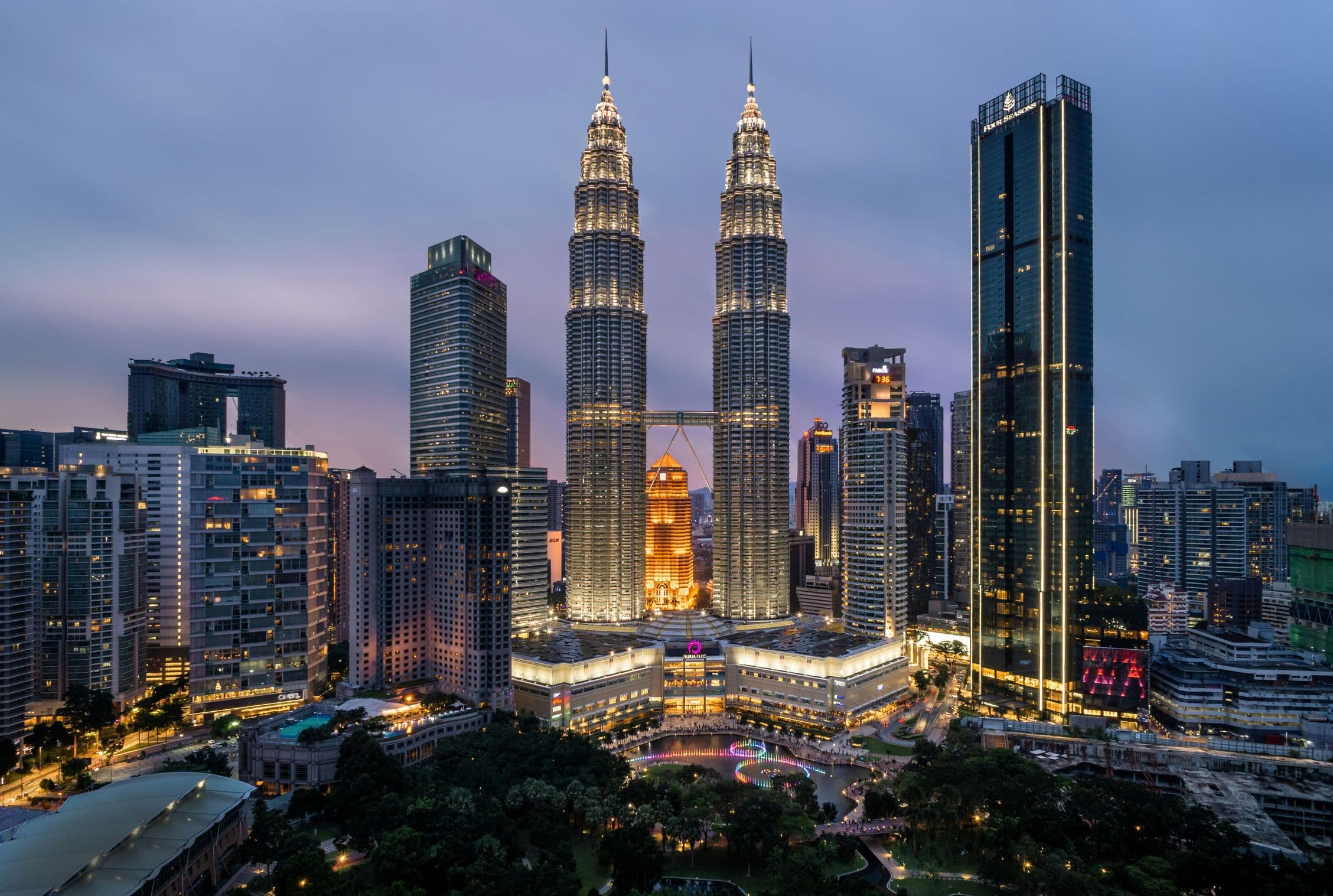
KL deserves two full days minimum rather than a single overnight before flying onward. The Petronas Towers and KLCC Park anchor an evening, Batu Caves make an easy half-day morning trip, and the city's food-hall culture — Jalan Alor at night, or a hawker crawl through Chinatown — rewards unhurried evenings rather than a checklist approach. Brickfields and Little India add a different food lane if Jalan Alor feels too packed, and a half-day in the Islamic Arts Museum or a quiet walk in the Lake Gardens gives the city a non-food beat between meals.
KL is also the country's main international gateway, which makes it a natural bookend even on trips centered elsewhere — flying in, spending two days, then flying onward to Penang, the east coast, or Borneo from KL's well-connected domestic terminal. The KL–Penang corridor also works by road or rail if you prefer not to fly every leg; the train is slower than the flight but turns the transfer into part of the trip instead of another airport queue.
Penang and food-led days
George Town is worth building a food-focused two or three days around rather than a single afternoon walk. Its UNESCO-listed core mixes street art, shophouse cafés, and a street-food scene dense enough that a single evening only scratches the surface — char kway teow at one stall, laksa at another, and a proper hawker-center dinner are each worth their own outing rather than combining into one rushed meal.
Penang Hill and the botanical gardens give the trip a change of pace from eating and walking the old town, and both are easy half-day additions if the food-led days start to feel repetitive by day three.
East-coast islands and monsoon awareness
The Perhentian Islands and Tioman are the main east-coast draws, and both are only sensibly visited in the dry window — resorts and boat operators on these islands often close entirely during the November–February monsoon, so checking the calendar before booking flights matters more here than almost anywhere else in the country. March through September is the safe booking window.
Because these islands are reached by boat from mainland jetties that themselves require a flight or long drive from KL, budget a full travel day each way rather than treating them as a quick add-on to a city-based trip.
Borneo as a separate chapter
Sabah and Sarawak are far enough from the peninsula, and different enough in character, that Borneo works best as its own dedicated trip rather than a bolt-on to a KL-Penang itinerary. Orangutan sanctuaries, Mount Kinabalu treks, and Sipadan-area diving each deserve enough time that squeezing Borneo into the tail end of a peninsula trip usually means seeing very little of it properly.
If Borneo is on the list at all, treat it as a standalone week rather than three days at the end of a longer Malaysia trip — flights from KL to Kota Kinabalu or Kuching are the easy part; it's the on-the-ground logistics (permits, guided treks, remote lodges) that need the extra time. A Kinabalu summit attempt alone typically needs two days on the mountain plus a rest day either side, which is a large chunk of a short trip if Borneo is treated as an afterthought rather than its own chapter.
Between the peninsula's west-coast cities and its east-coast islands sits the Cameron Highlands, a cooler mountain plateau of tea plantations that works well as a one- or two-night circuit-breaker on the way from KL toward the coast rather than a headline destination on its own. Travelers coming from KL's heat and Penang's humidity often use it as a deliberate slow-down — strawberry farms, tea-house views, and cooler evenings that make an early night feel earned rather than wasted — before continuing toward whichever coastal or Borneo chapter comes next. It is worth skipping entirely on a short trip rather than squeezing in a rushed overnight that adds a full travel day on each side.
Sequence cities before you apply
Pick the dominant theme first — city-and-food or island-and-nature — then build the itinerary around whichever season window matches that choice. Once the shape is set, open the Malaysia hub to check entry options for your nationality, then use the Malaysia requirements page for the current checklist.
Mistakes that ignore transfer times
- Booking Perhentian or Tioman islands during the November–February monsoon window when resorts are often closed.
- Trying to fit Borneo into the last three days of a peninsula-focused trip.
- Treating KL as a one-night layover instead of giving its food scene real time.
- Underestimating the boat-plus-drive time needed to reach east-coast island jetties from KL.
- Relying on a blog itinerary instead of the live requirements page for entry rules.
Live rules on the Malaysia hub
Keep this guide for route shape and seasonal sequencing. When you are ready to move on entry details, the Malaysia destination hub and the Malaysia requirements page are where the current rules are maintained.