Cambodia Travel Guide 2026: Angkor, Phnom Penh and Soft Adventure
Updated for 2026.
Cambodia is an easy country to over-schedule. Temple fatigue is real, and a trip that tries to see every ruin in Siem Reap in two days usually remembers none of them clearly. This guide is about pacing—Angkor, Phnom Penh, a coast or river add-on—before you head to the Cambodia destination hub to apply.
Why Cambodia works for first-time SEA trips
The country is compact, flights and roads connect the main stops without heroic travel days, and Angkor alone justifies the trip for most first-time visitors. Add a couple of days in Phnom Penh and you get a country that rewards a single well-paced week rather than demanding a month-long Southeast Asia circuit.
Weather does most of the scheduling work for you. The dry season from November through March brings cooler mornings that make early temple visits comfortable, while April and May turn brutally hot before the wet season settles in from June through October with short, heavy afternoon downpours that rarely wreck a whole day. Most first-time visitors land in the November–February window specifically for the Angkor sunrise sessions, when haze is lower and the light on the stone carvings is sharper.
Angkor without burning out
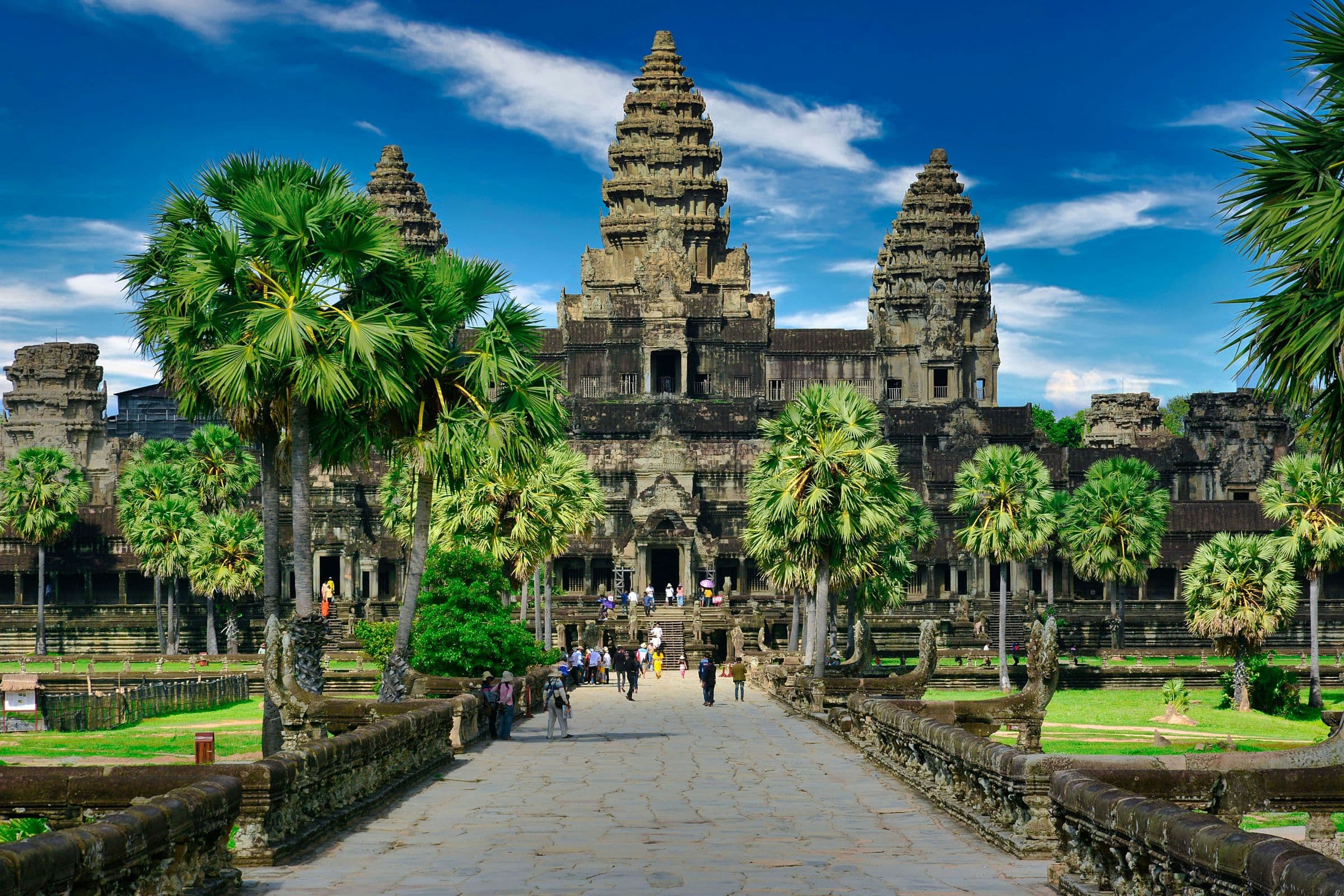
Split the temple complex across at least two full mornings rather than one marathon day. Angkor Wat at sunrise is worth the early alarm once; Bayon and Ta Prohm are better mid-morning when the sunrise crowd has thinned. Build in a slow afternoon between temple mornings—pool time or a Siem Reap town wander—so the ruins do not blur together by day three.
Multi-day passes make this pacing easier: a three-day pass used across a week lets you skip a temple morning entirely without wasting anything. Beyond the big three, Banteay Srei's fine pink sandstone carvings and Preah Khan's overgrown corridors are worth a slower third or fourth morning once the headline sites are done. A tuk-tuk driver hired for the full day is usually cheaper and less stressful than a bicycle in the midday heat, and most drivers know which side entrances avoid the worst of the tour-bus crowds.
Phnom Penh as context, not a checkbox
The capital is heavier territory than Siem Reap, with sites tied to the country's recent history alongside the riverside and markets. Give it enough time to actually sit with what you see rather than treating it as a transit stop between the airport and Angkor. One full day is a reasonable minimum; two lets the city breathe.
Tuol Sleng and the Choeung Ek killing fields are the two sites most visitors come specifically to see, and both deserve a slow, unhurried morning rather than a rushed pairing before lunch. Balance that weight with lighter stops in the same day or the next: the Royal Palace and Silver Pagoda grounds, the riverside promenade at sunset, and the Central Market's art-deco dome are all easy half-day additions that give the trip some breathing room after the history-heavy sites.
Coast and river add-ons
If your schedule allows it, Kampot's riverside pace or a short Sihanoukville/island loop makes a strong closing chapter after temple-heavy days. Kratie's river stretch is a quieter option for travelers who want one slow, low-key stop rather than another packed itinerary segment.
Skip Sihanoukville town itself if you can—the casino-heavy strip has little draw compared to a direct boat transfer out to Koh Rong or Koh Rong Samloem, where the beaches are quieter and the pace slows down fast. Kampot pairs naturally with a pepper-farm visit and a sunset boat ride on the river, and it sits close enough to Kep that a half-day crab-market lunch is an easy add without extending the trip by a full day. Kratie, further north, is really about one thing: a slow-boat or kayak outing to see the Irrawaddy river dolphins at dawn, best done as a single quiet detour rather than a multi-day base.
Borders, flights, and realistic day-one plans
- Flying into Siem Reap puts you closest to Angkor; flying into Phnom Penh suits a capital-first order.
- Overland border crossings from Thailand or Vietnam are common but add a full travel day—budget for it rather than squeezing in temple time the same day.
- Keep a photo of your arrival confirmation and hotel address handy for the ride from the airport.
- Small-denomination US dollars are useful immediately on arrival for tuk-tuks and tips.
- Riel is used for small change, but US dollars work almost everywhere in tourist areas—carry both.
- Book your Siem Reap or Phnom Penh hotel's airport pickup ahead of time; late-night arrivals are easier with a driver holding a sign than hunting for a metered taxi.
Planning order before you apply
Lock the shape first: arrival city, Angkor block, Phnom Penh block, optional coast or river close, departure buffer. Once the nights are set, open the Cambodia hub to check entry options for your nationality, then use the Cambodia requirements page for the current checklist.
Mistakes that rush temple days
- Trying to cover the full Angkor complex in a single day.
- Booking a same-day Phnom Penh flight right after an early Angkor sunrise.
- Skipping a buffer day before a long-haul departure.
- Relying on a blog itinerary instead of the live requirements page for entry rules.
- Underpacking sun protection for the exposed, treeless stretches between temple complexes.
Hub links for live entry rules
Keep this guide for pacing and route decisions. When you are ready to move on entry details, the Cambodia destination hub and the Cambodia requirements page are where the current rules are maintained.