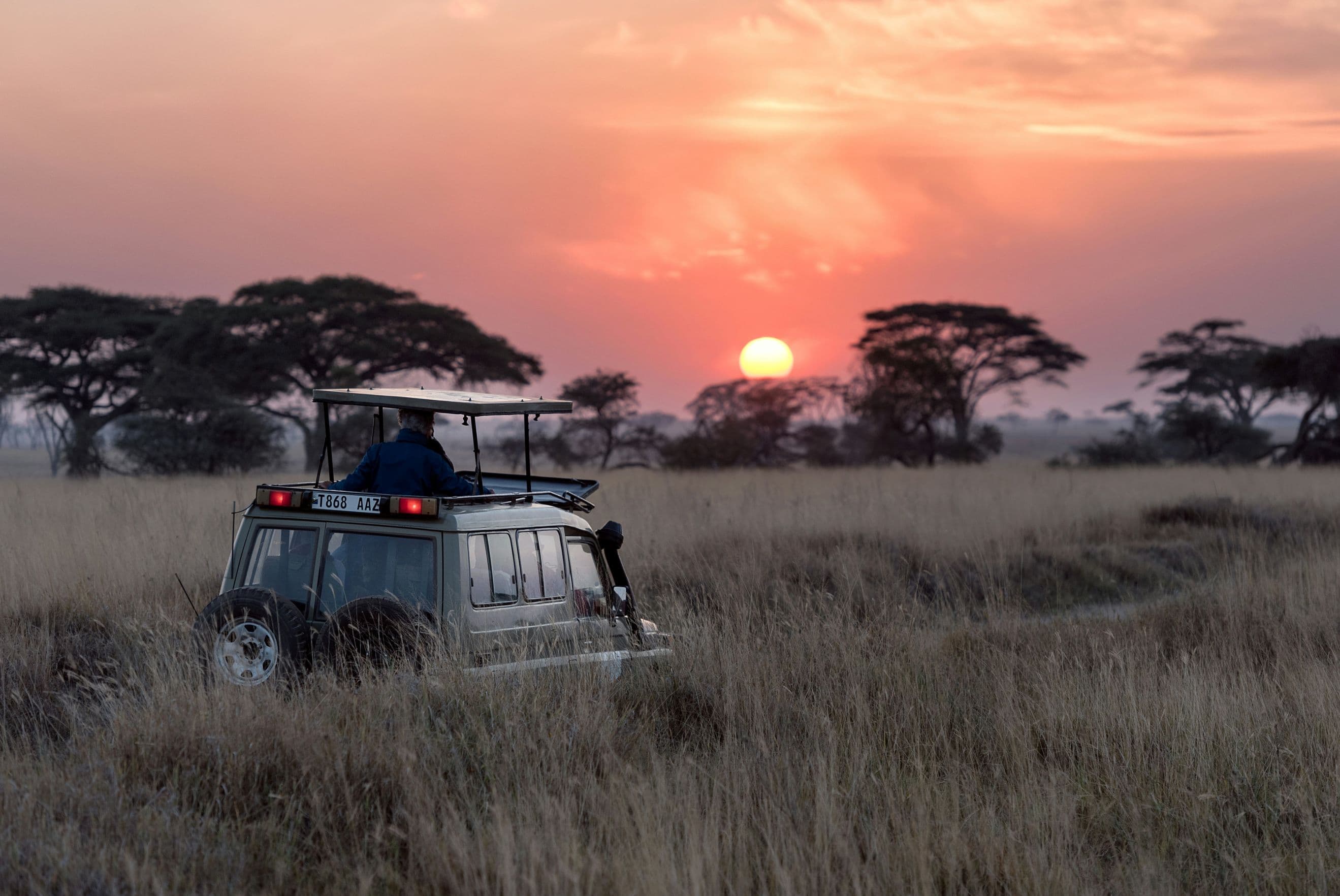
Tanzania Travel Guide 2026: Northern Circuit, Zanzibar and Trip Flow
Updated for 2026.
Tanzania is big enough that "just wing it" rarely works. This guide is about shaping a route—northern safari nights, a crater detour, an optional Zanzibar chapter—so the trip has a natural shape before you touch the Tanzania destination hub to apply.
Why travelers pick Tanzania
The northern parks pack an unusual amount of open-plains game viewing into a short drive radius from Arusha, and Zanzibar sits close enough to bolt on without a second long flight. That combination—dense wildlife plus a beach finish in one country—is why so many first-time safari trips start here rather than elsewhere in the region.
Timing shapes the whole trip more than most first-timers expect. The Great Migration's river crossings at the Mara River usually peak between July and September, while the calving season on the southern Serengeti plains runs roughly January through March—two very different wildlife shows in the same park system. Tarangire's baobab-dotted landscape and huge elephant herds are strongest in the dry season (June–October), when animals concentrate near the remaining water sources, and Lake Manyara's flamingo flocks and tree-climbing lions add a change of scenery for travelers who only have a day to spare between bigger stops.
Northern circuit vs southern parks
Most short trips stay in the north: Serengeti, Ngorongoro, Tarangire, and Lake Manyara sit within a loop that keeps transfer days low. The south (Selous/Nyerere, Ruaha) trades convenience for quiet—fewer vehicles per sighting, longer flights to reach, and a slower pace overall. Pick north if your calendar is tight; consider the south only if you have already done a northern trip or want to avoid crowds at almost any cost.
The practical difference shows up in transport. Northern parks connect by road in a few hours or a short scheduled flight between airstrips, so a driver-guide can move you from Tarangire to the Serengeti in a single day. Nyerere and Ruaha, by contrast, usually mean a dedicated light-aircraft transfer from Dar es Salaam, which adds a travel day and a higher per-person cost for the flight itself—worth it for the solitude, but it changes the shape of a first trip if you are also trying to fit in Zanzibar.
Ngorongoro and crater logistics
The crater floor is a single, dramatic game drive rather than a multi-day base, so most itineraries budget one full day there and stay in a rim lodge the night before. Roads down into the caldera get crowded by mid-morning, so an early departure from camp changes the whole experience—arrive before the tour buses and the light is better too.
Pack for two climates in one stop: the crater rim sits above 2,200 meters and nights there run genuinely cold, while the caldera floor warms up quickly once the sun clears the walls. A fleece or light jacket for the pre-dawn descent is worth more than an extra camera lens. The crater is also one of the more reliable spots in Tanzania to see black rhino, alongside dense lion prides and large buffalo herds concentrated around the soda lake at the center.
Zanzibar as a recovery chapter
Treat the island as a deliberate shift in pace, not a tacked-on extra day. Stone Town rewards a half-day of wandering before you move to a beach base in the north or east of the island. The flight from Arusha or the northern circuit airstrips is short, which is exactly why it works as a closing chapter rather than a separate trip.
Where you base yourself on the island changes the mood of the whole close-out. Nungwi and Kendwa in the north sit outside the strongest tidal swings, so the beach stays swimmable at most hours—useful if you want a straightforward last few days. Paje and the southeast coast trade some of that convenience for kite-surfing conditions and a quieter, more local feel. A half-day spice tour or a boat trip out to Mnemba Atoll for snorkeling are both easy to slot in without disrupting a beach-first schedule, and Stone Town's old fort and night market are worth the walk even on a short layover night.
Arrival rhythm and day-one tips
- Land in Kilimanjaro (JRO) for the northern circuit, not Dar es Salaam, unless Zanzibar is your first stop.
- Confirm your camp or lodge pickup time against your actual landing slot, not the generic brochure window.
- Keep a small cash float in USD for tips and informal stops; card access thins out fast once you leave Arusha.
- Save your driver or operator's contact offline before you lose signal in the bush.
- Pack neutral, dust-colored clothing rather than bright colors or all-black—both attract tsetse flies in wooded stretches of the circuit.
- Buy a local SIM at the airport if you want maps and messaging on the road; camp Wi‑Fi is often slow or absent between parks.
- Ask your operator in advance about anti-malarial timing so the first dose lands before you're deep in the bush with no pharmacy nearby.
Sequencing safari nights before you apply
Build the skeleton first: arrival buffer, northern circuit block, optional crater night, optional Zanzibar close, departure buffer. Once those nights are locked, open the Tanzania hub to confirm your entry option, then use the Tanzania requirements page for the current checklist before you submit anything.
A workable ten-night skeleton looks like this: one arrival night near Arusha or Kilimanjaro airport, three nights across Tarangire and the central Serengeti, one night on the Ngorongoro rim for the crater day, three nights on Zanzibar for the coastal close, and a final buffer night before your international flight out. Shorten the Zanzibar block first if you're tight on time—it compresses more gracefully than the safari core does.
Common itinerary mistakes
- Cramming the crater and Serengeti into the same day instead of splitting them properly.
- Booking a Zanzibar flight that lands too late to make check-in comfortable.
- Skipping a buffer night before an international departure after a dusty safari stretch.
- Treating this guide's itinerary notes as a substitute for the live rules on the requirements page.
- Underestimating drive times between parks—Serengeti to Ngorongoro alone can run three to four hours on unpaved sections.
- Assuming every lodge has reliable Wi‑Fi; confirm connectivity in advance if you need to work or check in with family.
Where live rules live
This article is deliberately about trip shape, not the fine print. For the current entry checklist and options for your nationality, go to the Tanzania destination hub or the Tanzania requirements page directly—that is where the details are kept up to date.